Benchmark indices Sensex and Nifty slid for a seventh straight session on Monday, logging their longest losing run in the past five months, following a bearish trend in global markets amid concerns over aggressive rate hikes by developed economies. Fresh foreign fund outflows and losses in IT, auto and oil stocks also dented investor sentiments. The BSE Sensex declined by 175.58 points or 0.30 per cent to close at 59,288.35 with 17 of its shares posting losses.

'Buy on dips, buy on dips and sell on rise.'

Indian benchmark equity indices experienced a significant downturn, with the Sensex plummeting over 800 points and the Nifty falling sharply, driven by rising crude oil prices, geopolitical tensions, and foreign capital outflows.

Among the Sensex pack, HCL Technologies, ICICI Bank, Tata Motors, Sun Pharmaceuticals, Tata Consultancy Services, Infosys, Kotak Mahindra Bank and Mahindra and Mahindra were the gainers. In contrast, HDFC Bank, Bajaj Finance, Larsen & Toubro, Tech Mahindra, UltraTech Cement and IndusInd Bank were among the laggards.

ICICI Bank was the top loser in the Sensex pack, shedding nearly 2 per cent, followed by UltraTech Cement, Asian Paints, ITC, Kotak Bank, Axis Bank and PowerGrid.

Benchmark equity indices Sensex and Nifty extended their gains for the third straight session on Wednesday, driven by last-hour buying in bank, metal, and FMCG shares.

ONGC was the top loser in the Sensex pack, shedding around 4 per cent, followed by NTPC, PowerGrid, M&M, Nestle India, SBI and HCL Tech. On the other hand, HUL, Bajaj Auto, Bharti Airtel, Bajaj Finserv were among the gainers.
Indian benchmark indices Sensex and Nifty experienced a decline due to renewed geopolitical concerns in the Strait of Hormuz, a strained US-Iran ceasefire, and the rupee hitting a record low against the US dollar.
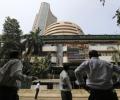
Top gainers in the Sensex pack included IndusInd Bank, ITC, L&T, M&M, PowerGrid, Asian Paints and SBI, ending up to 3.79 per cent higher.

Benchmark BSE Sensex and Nifty ended lower on Wednesday, dragged down by losses in banking stocks amid weak global market trends. The 30-share Sensex declined by 168.08 points or 0.28 per cent to settle at 59,028.91. During the day, it fell 474.1 points or 0.80 per cent to 58,722.89. The broader NSE Nifty dipped 31.20 points or 0.18 per cent to 17,624.40.

Stock markets rebounded on Friday with the benchmark Sensex closing higher by 316 points after heavy buying in banking and metal shares amid optimism over trade deal progresses and India's participation in Pax Silica.

Among the Sensex stocks, Reliance Industries climbed the most by 3.11 per cent. Bajaj Finance, Titan, Axis Bank, ICICI Bank, Bajaj Finserv, IndusInd Bank, UltraTech Cement, Larsen & Toubro, HDFC Bank, HDFC and Kotak Mahindra Bank were among the other major winners. Power Grid, Hindustan Unilever, Tech Mahindra, Tata Consultancy Services, Infosys and Asian Paints were among the biggest laggards.

Indian equity benchmark indices Sensex and Nifty rallied in early trade, driven by reports of a second round of talks between the US and Iran, which are fostering hopes for a resolution to the West Asia conflict, coupled with Brent crude oil prices trading below the USD 100 per barrel mark.
Indian equity benchmark indices, Sensex and Nifty, tumbled nearly 2 per cent for the fourth consecutive session, driven by elevated crude oil prices, escalating US-Iran tensions, unabated foreign fund outflows, and a depreciating rupee.
Indian equity benchmark indices, Sensex and Nifty, tumbled nearly 2 per cent for the fourth consecutive session, driven by elevated crude oil prices, escalating US-Iran tensions, unabated foreign fund outflows, and a depreciating rupee.

Indian benchmark equity indices, Sensex and Nifty, closed lower due to investor caution over rising bond yields, a weaker rupee, and fresh fuel price hikes, which have revived inflation concerns.

The Indian stock market's trajectory this week will be significantly influenced by crude oil prices, global market trends, and the commencement of the corporate earnings season, with IT major TCS set to announce its June-quarter results on July 9.
Benchmark equity index Sensex and Nifty gave up early gains and ended lower on Monday as investor sentiment was hit due to unabated foreign fund outflows and losses in index heavyweights Reliance Industries and HDFC Bank. The 30-share BSE Sensex declined 168.21 points or 0.28 per cent to settle at 60,092.97 as 15 of its constituents dropped. The barometer opened higher and touched a high of 60,586.77 in morning session. Later in the day, it fell 297.35 points or 0.49 per cent to 59,963.83.

From the 30 Sensex firms, Bajaj Finance, Reliance Industries, Tata Steel, JSW Steel, Tech Mahindra, Tata Motors, Kotak Mahindra Bank and Maruti were the biggest laggards. Reliance Industries Ltd, India's most valuable company, on Monday reported a 5 per cent fall in the July-September quarter net profit as weak oil refining and petrochemical business hurt operational performance. ICICI Bank, Bharti Airtel, Asian Paints, Adani Ports, UltraTech Cement and HCL Technologies were among the gainers.

Benchmark equity indices continued their record-shattering spree on Tuesday, with the Sensex and Nifty hitting their fresh all-time high levels in early trade, amid persistent foreign fund inflows. Also, buying in Bajaj Finance, Bajaj Finserv, Tata Consultancy Services and HDFC twins added to the positive market momentum. Rallying for the fifth straight session, the 30-share BSE Sensex jumped 381.55 points to hit its all-time peak of 65,586.60 in early trade.

Benchmark BSE Sensex and Nifty closed on a flat note after a volatile session on Wednesday profit booking in IT and realty shares negated gains in metal and oil & gas stocks. The 30-share BSE Sensex ended 35.78 points or 0.06 per cent lower at 58,817.29, while the broader NSE Nifty inched 9.65 points or 0.06 per cent higher at 17,534.75. The market remained range-bound for the most part of the session as investors kept their exposure low due to weak global cues, traders said.

Indian benchmark stock indices, Sensex and Nifty, closed nearly 1 per cent lower due to surging crude oil prices, weak global market trends, and significant foreign fund outflows, with geopolitical tensions and inflation concerns further dampening investor sentiment.

Shares of Reliance Industries climbed nearly 3 per cent after its digital unit, Jio Platforms, filed draft papers for what could become India's largest-ever initial public offering, with the offering potentially raising around Rs 37,700 crore (USD 4 billion).

Benchmark indices Sensex and Nifty ended marginally higher on Wednesday as a sharp decline in IT blue-chip stocks restricted the rally in the markets.

Among the Sensex firms, Bajaj Finserv, Tata Motors, Asian Paints, ITC, IndusInd Bank, State Bank of India, Tata Steel, Wipro, Infosys and Maruti were the major gainers. Tech Mahindra, HCL Technologies, Kotak Mahindra Bank, Titan and Larsen & Toubro were the major laggards.

Bajaj Finance led the Sensex gainers' chart, spurting up to 2.38 per cent, followed by Bajaj Finserve rising 2.11 per cent and IndusInd Bank closing 1.66 per cent higher. Bharti Airtel, SBI and L&T increased by 1.60 per cent, 1.28 per cent and 0.92 per cent, respectively.

Indian equity markets, including the Sensex and Nifty, experienced a significant downturn for the second consecutive day, driven by escalating geopolitical tensions in West Asia and persistent foreign fund outflows.
Indian stock markets extended their gains for a third consecutive day, with the Sensex climbing 753 points and the Nifty closing above 24,550, driven by a drop in crude oil prices and optimism surrounding potential peace talks between Iran and the US.

The Sensex pull-back was mainly staged by constant selloffs in banking shares, led by ICICI Bank, Axis Bank and IndusInd Bank. Of the Sensex constituents, 19 shares suffered losses.

Bajaj Finserv was the top loser in the Sensex pack, shedding over 3 per cent, followed by Maruti, Bharti Airtel, Asian Paints, Bajaj Finance and HDFC.
Benchmark indices Sensex and Nifty ended lower on Thursday, snapping a three-day rally, amid a weak trend in global stock markets.

Equity benchmark indices Sensex and Nifty rebounded sharply by nearly 1 per cent on Monday, driven by strong buying in power, banking, and financial stocks.

Sensex and Nifty post steepest weekly loss in over a year, falling nearly 3 per cent.

Benchmark Sensex tumbled 1,236 points or 1.5 per cent while Nifty closed near 25,450 on Thursday following an across-the-board sell-off amid escalating geopolitical tensions between the US and Iran.

Among the Sensex firms, Larsen & Toubro, Axis Bank, Tata Steel, Bajaj Finance, Power Grid, Asian Paints, Mahindra & Mahindra and Bajaj Finserv were the biggest gainers. State Bank of India, Hindustan Unilever, Tata Motors and Titan were the laggards.
Bajaj Finance was the biggest gainer in the Sensex pack, rising 2.70 per cent, followed by Power Grid, IndusInd Bank, NTPC, Bharti Airtel, ITC, Bajaj Finserv, Infosys, Nestle, Tata Steel, Tata Consultancy Services, Titan and Axis Bank. Reliance Industries, Mahindra & Mahindra, Maruti and State Bank of India were among the laggards.
Indian equity benchmarks Sensex and Nifty surged nearly 1 per cent, driven by strong earnings reports from FMCG and auto sectors, alongside a rally in Asian markets and signs of de-escalation in geopolitical tensions.
From the 30-Sensex firms, ITC tanked 9.69 per cent, following Bajaj Finance, Asian Paints, Bharat Electronics and ICICI Bank. In contrast, NTPC, Eternal, Mahindra & Mahindra, Larsen & Toubro and Power Grid were among the gainers.

Benchmark equity indices Sensex and Nifty tumbled more than 1 per cent on Friday due to across-the-board selloff, especially in metal, IT and commodity stocks, tracking sluggish global markets.

Indian benchmark stock indices, Sensex and Nifty, surged over 1 per cent, driven by optimism surrounding potential US-Iran peace talks and a significant drop in crude oil prices below the USD 100 per barrel mark. This de-escalation in geopolitical concerns and easing inflation pressures provided a substantial boost to investor sentiment.
